

SEO (search engine optimisation) for hospitals is the practice of improving visibility for hospitals and healthcare institutions in search engine results pages for specific search terms. More visibility in the search results leads to more traffic to a hospital’s website, and more enquiries for treatments and consultations.
The benefits of SEO for hospitals and healthcare institutions
Increase intent-driven traffic to website
SEO can increase the number of people coming to your hospital’s website, whether that be to research a symptom that they’re suffering from or to research prices for a surgery.
Whereas paid channels such as PPC or social media advertising can build reach for your healthcare institution, improving performance in the organic search results puts your business in front of potential customers who are actively searching for the services that you offer.
Higher ROI compared to other channels
Paying for clicks via paid channels can be an expedient way of getting people to your website, however, an SEO campaign improves the website so that traffic can organically build over time.
SEO is a long-term marketing strategy. Whilst it may not provide the immediate returns sometimes seen from a successful PPC strategy, a well-researched and executed SEO campaign can provide the foundation for future digital success.
Long-term investment in reduced patient acquisition costs
Reducing patient acquisition costs is a challenge facing every hospital’s marketing manager. An SEO campaign can drive more enquiries through your website, building on your digital investment and reducing the overall cost per patient acquisition.
As your website converts more patients organically, you may have more of your marketing budget spare, allowing you to pursue other digital marketing channels.
The challenges of an SEO campaign for hospitals
E-A-T & YMYL
E-A-T stands for Expertise, Authoritativeness and Trustworthiness. These three factors are central components of Google’s Quality Rater Guidelines (QRG).
The QRG are used by Google’s quality raters. These people work for Google, manually assessing websites and feeding information back to Google, who use the data to inform changes made to the dozens of algorithms used to index search results.
YMYL stands for Your Money or Your Life. This acronym is attributed to websites by Google whenever site content has the potential to cause a major impact on a person’s life, such as medical, legal or financial sites.
Google states that a website’s Expertise, Authoritativeness and Trustworthiness (E-A-T) is especially important for YMYL sites. Such sites must be able to show an appropriate level E-A-T in order to be considered of a high quality by Google.
Algorithmic changes
The search results landscape is constantly shifting. Google is constantly striving to improve the search experience for users and update their algorithms as much as 9 times per day.
Specific attention has been paid to the healthcare niche over the years, with at least one major algorithm update being attributed by SEO experts as specifically focused on healthcare.
The August 1, 2018 Google update was identified by experts as specifically impacting the healthcare niche. Safety and trust were the two criteria pinpointed as impacting websites who either benefited or suffered as a result of the algorithm change.
This update proved that Google is particularly focused on making wide-reaching changes to their algorithm that specifically target the healthcare niche. Whilst this update is some way in the past, there’s no guarantee that Google won’t have another in the pipeline.
High authority competition
David Feinberg, VP of Google Health, has gone on record stating that as much as 7% of the billions of searches that take place every day on Google are health-related, equating to roughly 70,000 searches a minute.
Given the sheer volume of health-related searches that take place on a daily basis, it should come as little surprise that competition for keyword visibility for these terms can be very stiff.
Also, due to the YMYL nature of medical-related search queries, Google is more likely to favour high authority websites that have proven E-A-T in the field, such as NHS.uk and Mayo Clinic.
Hospitals hoping to optimise their website to compete for high-volume search terms must be willing to put in the work to improve their overall E-A-T, so that they can effectively compete with such high authority entities.
The role of content in hospital SEO
Create landing pages for your target search terms
Independent hospitals compete with the NHS and other health-related websites in the search results. By undertaking keyword research you should be able to identify the variations of search terms that your website has the best chances of ranking for.
In order to effectively compete for these rankings, you’ll need to create in-depth content about the surgeries and treatments that your hospital offers. You can assess competitor’s content for ideas, and even leverage the knowledge of your own staff to provide the best information for your users.
FAQs
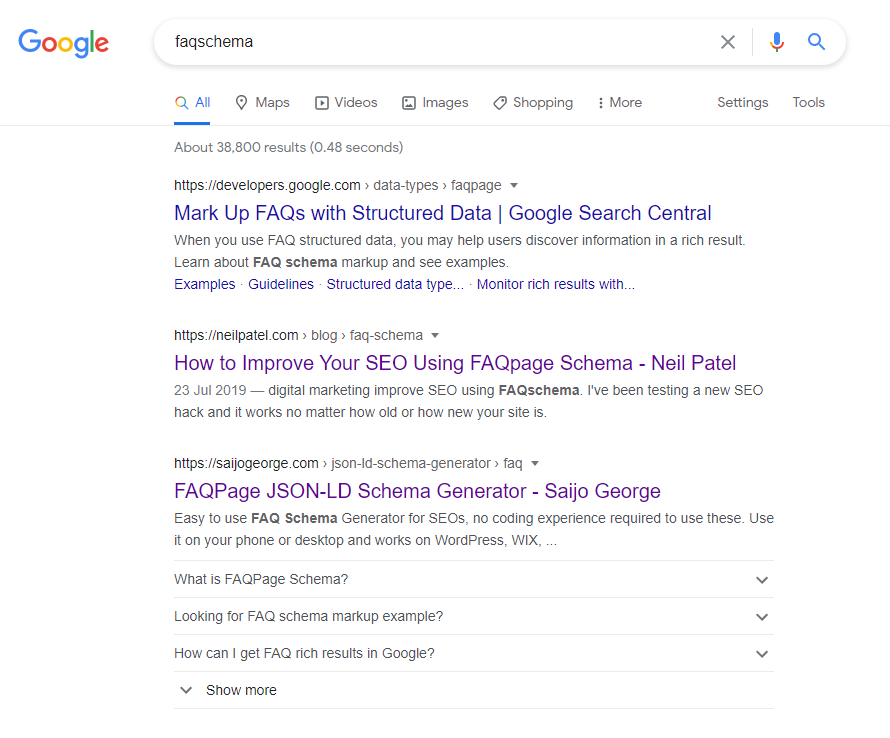
By identifying and answering your customers’ frequently asked questions you can build trust and also create more visibility for your website. There will be a set of unique frequently asked questions that correlates with each treatment or surgery that your hospital offers.
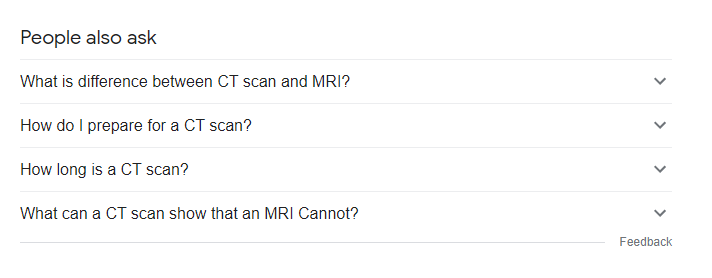
You can discover frequently asked questions to base your content on by exploring the search results pages for your chosen search terms. The ‘People Also Ask’ section is often populated with these FAQs.
Medically review your content
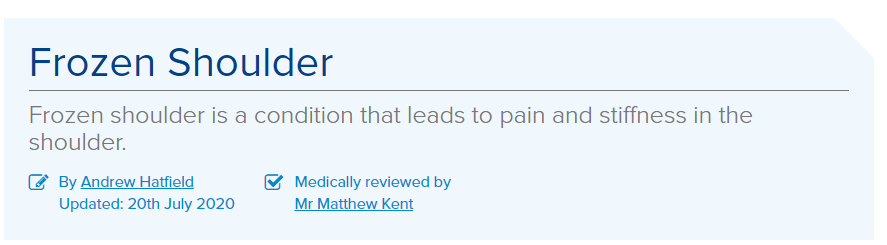
We’ve already discussed how your content will be considered YMYL by Google, so it’s important that you do everything you can to prove your E-A-T credentials. This includes getting all your content medically reviewed.
This is easier than it might sound, especially if you have a good working relationship with the consultants in your hospital. Make sure each page has been reviewed by the appropriate expert in your hospital, and then add a byline showing when it was reviewed and by whom.
Author/Expert bios
Considering the YMYL nature of hospital websites, it’s important to show the credentials of those writing and reviewing content. Each writer should have an author page listing their credentials and what makes them qualified to write on the topic.
If you’re relying on medical experts to review your content, then you should feature an in-depth page on them as well. Describe what their specialty is, list their qualifications, experience and education.
This is your opportunity to boast about the expertise that your hospital offers, so don’t hold back when showing off about your staff’s knowledge.
Writing For Featured Snippets
Google sometimes identifies commonly searched queries as being suitable for featured snippets. These are positioned at the top of the search results page and usually offer a simple answer to a query, allowing the user to get the information they need without scrolling through search results.
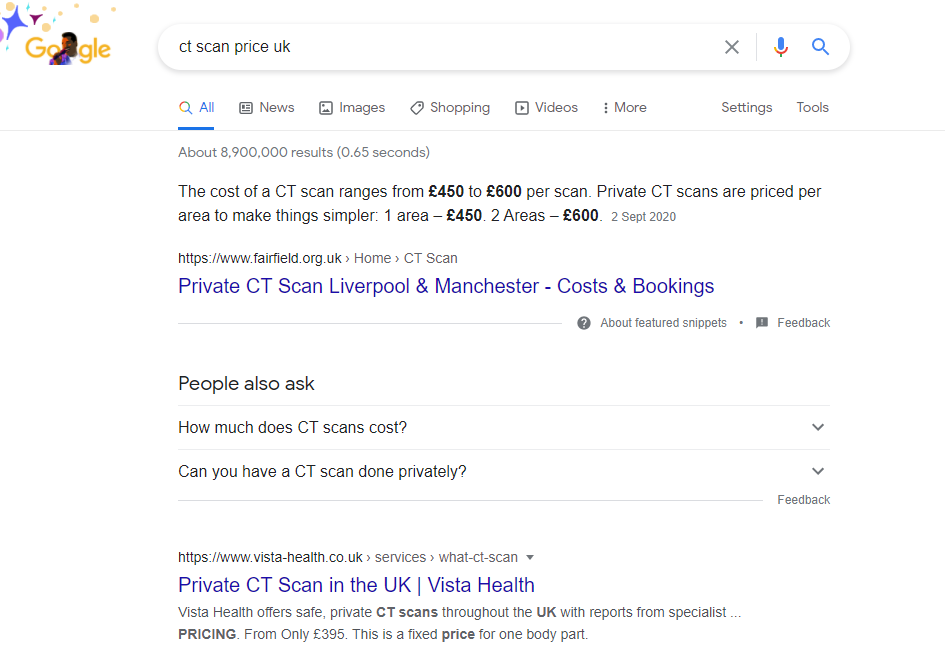
Using search tools such as Ahrefs, SEMRush or Google Search Console, you may be able to identify these commonly searched queries. Writing succinct content based around these queries could see your hospital claim the featured snippet from competitors.
For example, you may find that users are often looking for the cost of specific surgeries, using queries like ‘neck lift cost uk’.
You can then feature an FAQ on your page such as: ‘How much does a neck lift cost in the UK?’. Make sure to answer the question directly, featuring a similar syntax. For example:’A Neck lift in the UK costs ‘£xx.’
Pro tip: Highlight the importance of the content to Google by wrapping the question in a header tag.
Testimonials
Customer testimonials can be a crucial factor in converting new patients on your website. Testimonials build trust with your potential customers and can make the difference between them enquiring or bouncing away from your site.
Ideally, you should be able to feature service-specific testimonials on each landing page. So, for example, someone searching for a CT scan near them can quickly find out what kind of experience they can expect from another customer.
Testimonial content can also be used on your expert/author pages to help further boost their E-A-T.
Structured data
We’ve already talked about how FAQschema can help you claim more real estate on the search results page, however, hospitals can also benefit from other structured data implementation.
LocalBusiness schema contains the key information about your hospital, such as opening times, price range and address. Providing this data in schema allows Google to better understand your hospital and present it accurately in the search results.
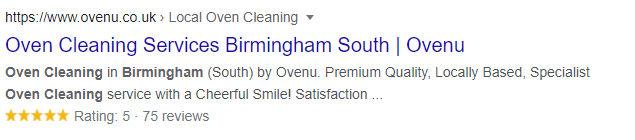
If your business has a good review collection system in operation then you may also be able to leverage review schema for certain pages on your site. This will allow you to show off your review stars on the search results page and improve click-through rates.
Local SEO for hospitals
In some cases, a hospital may benefit from a local SEO strategy which increases the visibility of a website for searchers in a specified area around the hospital.
Google My Business optimisation
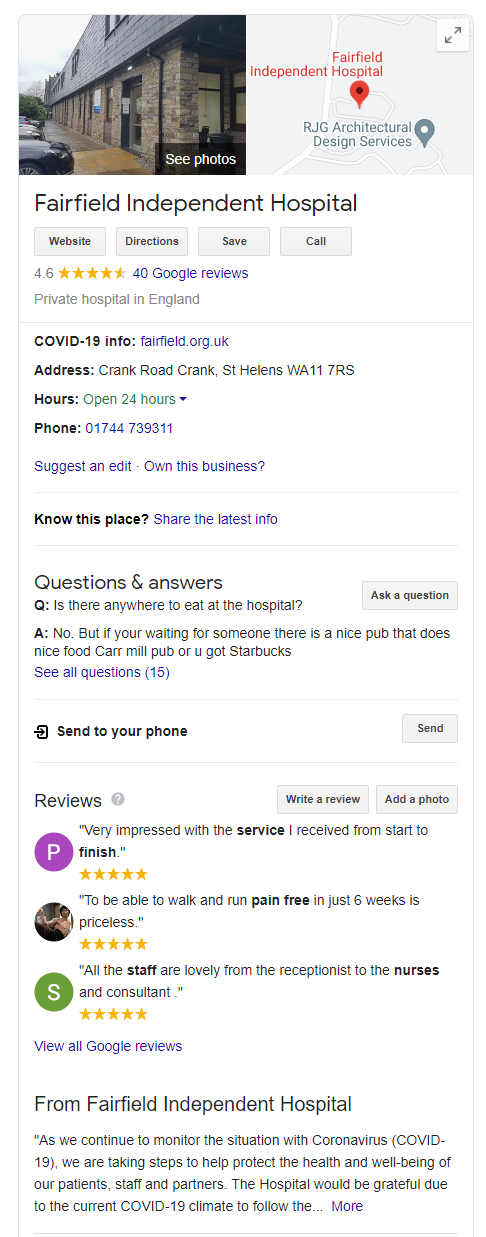
One of the best foundations for local SEO is an accurate, up-to-date Google My Business (GMB) account. GMBs are free to sign up for and can provide important information such as directions (via Google Maps) and reviews to prospective customers.
The information you provide in your GMB account should match the information you provide on your website. You should also make sure that any citations you’ve built for your hospital also match your GMB.
Review acquisition
Local map rankings are directly linked to the number and rating of reviews left on your GMB. Whilst testimonials have their place on your website, reviews left on your GMB will prove that your business can be trusted.
You should have a review acquisition strategy in place in order to prompt happy customers to review your hospital. Make it as easy as possible for your customers to do this by dropping a link straight to your GMB in your outreach email.
Responding to reviews, even negative ones, builds trust with potential customers, but can also improve visibility in the local map rankings.
In Google’s words: ‘When you reply to reviews, it shows that you value your customers and their feedback. High-quality, positive reviews from your customers can improve your business visibility and increase the likelihood that a shopper will visit your location’.
Google posts
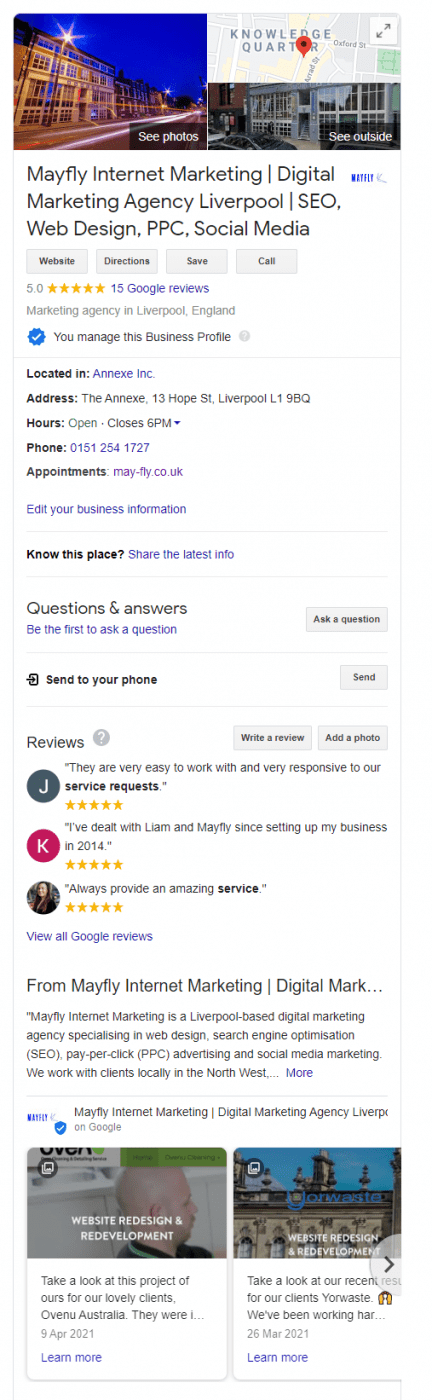
Google posts are an often underused aspect of a business’ Google My Business setup. Launched in 2016, Posts allow hospitals to showcase updates, offers, or announcements that may be of interest to those searching for them.
Although Posts used to stay live for just 7 days, Google now displays your 10 most recent posts in a carousel, enriching your GMB profile with content that could convert your next patient.
Whilst creating Posts does’t influence your ranking, they do add extra value to your GMB and allow you to reap more leads from them.
Hospital & Healthcare SEO FAQs
What is digital marketing for healthcare?
Digital marketing for healthcare covers the whole gamut of digital channels including SEO, Social Media Marketing and PPC. Healthcare institutions can benefit greatly from investing in digital marketing channels, as this allows them to expand their reach and appear in front of the right people at the right time.
How do hospitals do digital marketing?
Hospitals’ approaches to digital marketing can vary greatly depending on their budget and business objectives. Independent hospitals with large marketing budgets may be able to invest in a multi-channel digital approach that encompasses paid (PPC, social advertising) and earned channels (SEO).
Why is digital marketing important in healthcare?
Digital marketing is important to the healthcare industry as it offers an expedient, cost-effective means of acquiring patients without the use of costly traditional advertising.
Competition is arguably more intense online, with hospitals from across the UK (and sometimes the world) competing from visibility. However, a well-planned SEO strategy can help a healthcare institution stand out from the crowd.
Why is digital marketing important to doctors?
Digital marketing plays an important role in promoting the unique services of doctors and consultants. A smart SEO strategy can help hospitals identify the search queries that prospective patients use to research their symptoms and potential treatment options.
This can inform content creation, allowing hospitals to give their consultants the best visibility in the search results concerning their specialties.
What is the most trusted medical website?
WHO.int is one of the most trusted, authoritative medical websites, according to Majestic which ranks it at 69 of the Majestic Million. The World Health Organizations’ website also has a domain rating of 93 according to Ahrefs, which is illustrative of the number of websites that link to it.
Does your hospital need an SEO strategy?
Hospital websites can often be large and unwieldy. In the bid to cover all the treatments that a hospital offers, as well as the symptoms that potential patients may be suffering from, websites can bloat in size whilst remaining unoptimised and inefficient.
A purpose-built SEO strategy ensures that there’s a plan in place for every aspect of a hospital’s website.
Any underlying technical issues can be cleaned up before site content can be reassessed and medically reviewed so that it can satisfy Google’s E-A-T requirements.
We’ve successfully claimed hundreds of top 10 rankings for clients in the medical niche and understand how best to create content that converts customers.
Our Liverpool SEO team has experience creating SEO strategies for businesses across the world, and understand the importance of keeping up to date with the latest changes in the industry. We also write in-depth articles to help specific sectors level up their SEO efforts, such as our ultimate guide to Franchise SEO.
As a leading Liverpool digital marketing agency we know how important it is to back up strategy with sound research and analysis. We take an analytical approach to our work using the best industry tools to respond to the ever-changing search landscape.
If you’re still unsure how best to execute your hospital’s SEO strategy, then get in touch with us for a consultation and find out where your website’s opportunities are hiding.